Is a Low Rice Purity Score a Bad Thing? Debunking the Myth
The Common Misconception
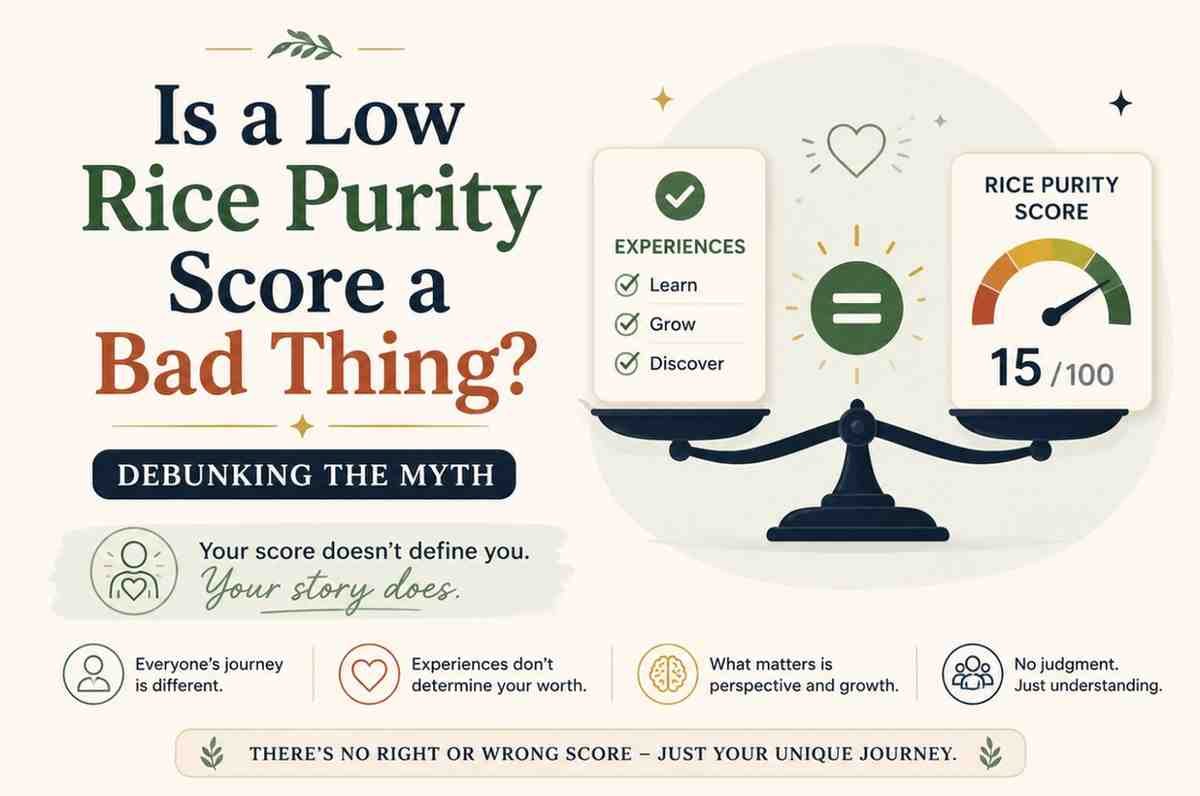
Scroll through any comment section under a shared Rice Purity Test result, and you’ll spot it almost immediately: someone joking that a low score means you’ve “lost.” It’s an easy assumption to make — the word “purity” is right there in the name, and a lower number naturally feels like it’s signaling something negative. But that reading misunderstands what the test is actually built to do.
If you’re still getting familiar with how scoring works in the first place, our full breakdown of what your Rice Purity score really means is a good place to start before diving into this myth.
What a Low Score Actually Means
The Rice Purity Test starts everyone at 100 points and subtracts one point for every “yes” answer across its 100 questions. A low score simply means more boxes were checked — nothing more, nothing less. It is a tally of self-reported experiences, not a moral scoring system, and it was never designed to rank people against a standard of “goodness.”
Many of the test’s questions cover completely ordinary life events: travel, relationships, staying out late, trying new things. A low score often just reflects someone who has lived a fuller, more eventful chapter of life so far — not someone who has done anything wrong.
Why Comparison Culture Gets This Wrong
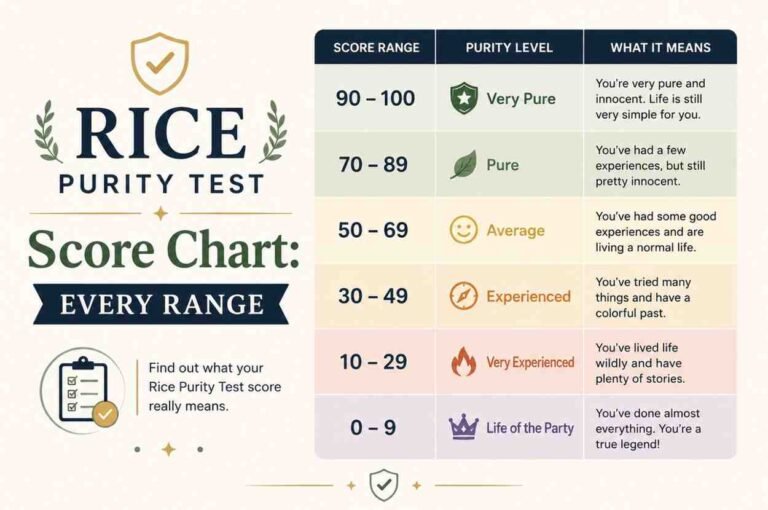
The “lower is worse” myth mostly comes from how the test is shared online — as a bragging or joking mechanic among friend groups, where scores get compared like a scoreboard. That casual framing sticks, even though it was never how the test was intended to be read. If you want to see how scores are generally grouped, the Rice Purity score chart lays out every range without ranking any of them as good or bad.
Real Reasons Scores Vary So Much
| Factor | How It Affects Score |
|---|---|
| Age | Older test-takers have generally had more time and opportunity for more “yes” answers |
| Environment | College campuses, hometowns, and social circles shape which experiences are common |
| Personal values | Individual choices and boundaries influence which questions get a “yes” |
| Life stage | Someone early in a life transition will often score differently than someone further along |
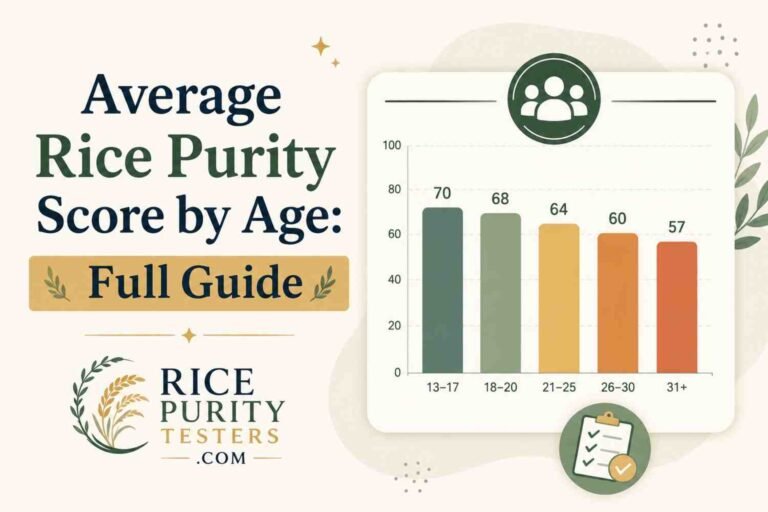
Two people who are equally thoughtful, equally kind, and equally responsible can land on completely different scores just because their circumstances differed. For a deeper look at how age plays into this, see our guide to the average Rice Purity score by age.
Reframing How You See Your Score
The healthiest way to look at a Rice Purity score — high or low — is as a light, personal snapshot rather than a report card. It was built as a college orientation icebreaker, meant to spark conversation and laughter, not comparison anxiety. Treating a low score as something to be ashamed of misses the point of the test entirely, and frankly, gives a crowdsourced internet quiz far more authority than it deserves.
Frequently Asked Questions
1. Does a low Rice Purity score mean something is wrong with someone?
No. It only reflects the number of listed experiences someone has had, not their character or worth.
2. Is a high score “better” than a low score?
No — the test doesn’t rank scores as better or worse. Higher just means fewer “yes” answers.
3. Why do people joke that a low score is bad?
Mostly because of how the test gets shared casually among friends as a comparison game, not because of how it was designed.
4. Does a low score reflect risky behavior?
Not necessarily — many of the test’s questions cover common, low-risk life experiences.
5. Can someone with strong personal values still score low?
Yes. A score reflects experiences, not values or judgment.
6. Is the test designed to measure morality?
No. It’s a self-report quiz of life experiences, originally created as a college icebreaker.
7. Should I feel embarrassed about a low score?
There’s no need to — the score isn’t a judgment, and it was never meant to be taken that seriously.
8. Do low scores usually belong to older people?
Generally, yes, since more time and independence typically means more life experiences overall.
9. Is there a “correct” score to aim for?
No — there’s no target score. The test isn’t structured around achieving a specific number.
10. Why does the name “purity test” make people assume low is bad?
The wording implies a moral scale, but the actual scoring mechanism is simply a count of experiences, not a purity judgment.
11. Can comparing scores with friends be harmful?
It can be if it turns into pressure or judgment — it’s meant to be lighthearted, not competitive.
12. What’s the best mindset to have about your score?
Treat it as a fun personal snapshot, not a report card on your life choices.