How to Take the Rice Purity Test with Friends (Group Guide)
Why People Take It in Groups
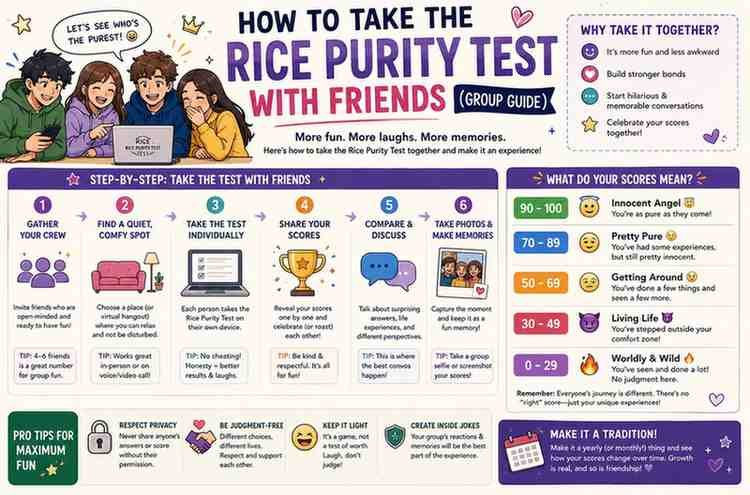
Although the Rice Purity Test can be taken alone out of curiosity, it’s most commonly enjoyed as a group activity. Comparing scores gives friends a lighthearted excuse to swap stories, laugh at shared experiences, and learn a few surprising things about each other. This social, comparison-driven appeal is part of why the test spread so widely online in the first place.
Setting the Right Tone Beforehand
Before diving in as a group, it helps to set expectations. Since some of the test’s 100 questions touch on more personal territory, framing the activity as lighthearted and pressure-free from the start makes it far more enjoyable for everyone involved. A quick “no judgment, just for fun” reminder goes a long way.
| Good Group Practice | Why It Helps |
|---|---|
| Agree it’s just for fun beforehand | Removes pressure to “perform” a certain score |
| Let people opt out of sharing specifics | Keeps the activity comfortable for everyone |
| Avoid singling out one person’s score | Prevents the activity from feeling like judgment |
| Keep the mood light and joking | Matches the test’s original casual intent |
Respecting Privacy and Comfort Levels
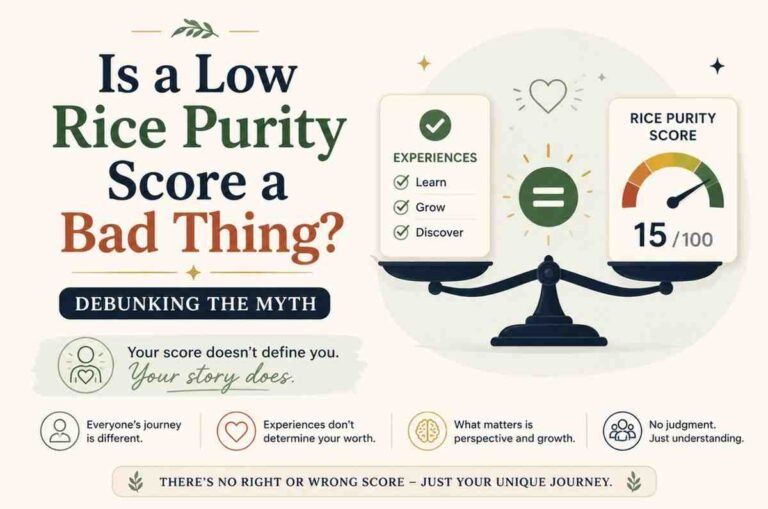
Not everyone will want to share their exact score, and that’s completely fine. A good group approach treats the final number as optional to disclose — some people may prefer to just talk about general categories rather than reveal a specific score. Since a lower score isn’t a bad thing, but social pressure can still make people uncomfortable sharing, respecting boundaries matters more than getting everyone to reveal a number.
Comparing Scores the Right Way
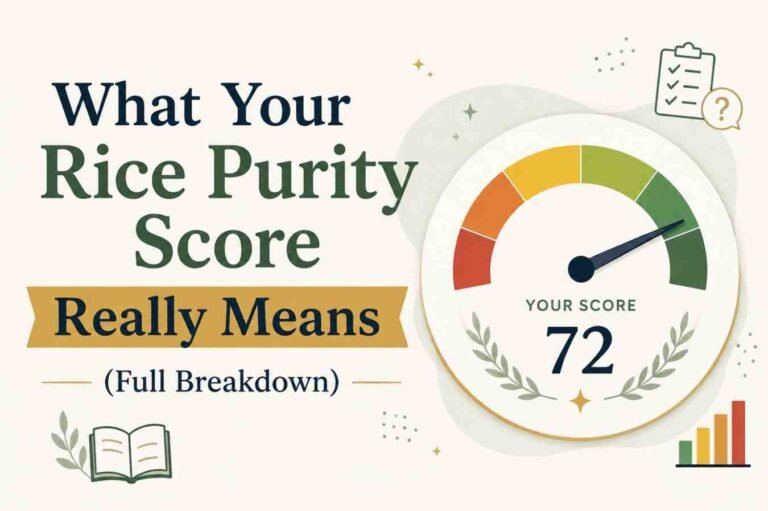
When it’s time to compare, keep things playful rather than competitive. Referencing the general Rice Purity score chart can help frame the conversation around ranges rather than exact numbers, which keeps things a little more relaxed and less like a scoreboard.
What Not to Do When Comparing Results
A few things quickly turn a fun group activity into an uncomfortable one:
- Pressuring someone to reveal a score they’d rather keep private.
- Mocking or shaming a specific answer or score.
- Treating the results as “gossip” to bring up later.
- Assuming a score says something definitive about someone’s character.
Avoiding these keeps the activity aligned with its original spirit — a casual icebreaker, not a tool for judgment.
Frequently Asked Questions
1. Is the Rice Purity Test meant to be taken in groups?
It can be taken alone, but it’s commonly enjoyed as a group activity where friends compare and discuss results.
2. Should everyone in a group be required to share their score?
No — sharing should always be optional, and people should feel comfortable keeping specifics private if they prefer.
3. How can I make the activity feel less like a competition?
Framing it as lighthearted and judgment-free from the start, and avoiding direct comparisons, keeps the tone relaxed.
4. Is it okay to ask friends about specific answers?
Only if they’re comfortable sharing — it’s best to let people volunteer details rather than pressing for specifics.
5. What if someone doesn’t want to participate?
That’s completely fine — participation should always be optional and pressure-free.
6. Does a lower score in the group mean something is wrong?
No, scores simply reflect self-reported experiences and shouldn’t be treated as a judgment.
7. Is it rude to bring up someone else’s score later?
Yes — treating someone’s result as ongoing gossip goes against the light, casual spirit the test was meant to have.
8. How do most groups typically compare results?
Often casually, discussing general ranges or shared answers rather than focusing heavily on exact numbers.
9. Can taking the test as a group bring people closer?
Yes, many people find it’s a fun way to bond over shared stories and inside jokes.
10. Is there a “right” way to react to someone’s score?
The best approach is a neutral, non-judgmental reaction, regardless of where someone’s score falls.
11. Should younger teens take the test in groups the same way as adults?
The same respectful, pressure-free approach applies at any age — comfort and consent should always come first.
12. What’s the best mindset going into a group Rice Purity Test session?
Treat it as a fun icebreaker, not a competition or judgment tool — that’s the spirit it was originally created in.