Rice Purity Test vs Other Fun Quizzes: Key Differences Explained
What Makes a Quiz “Fun” Online
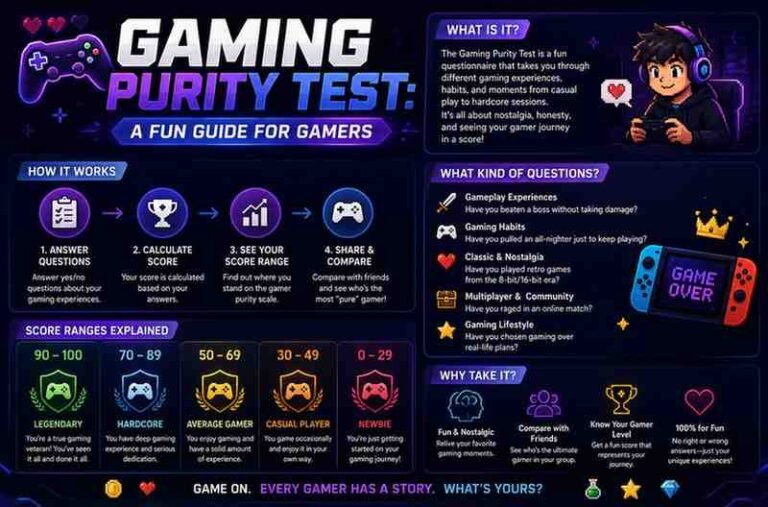
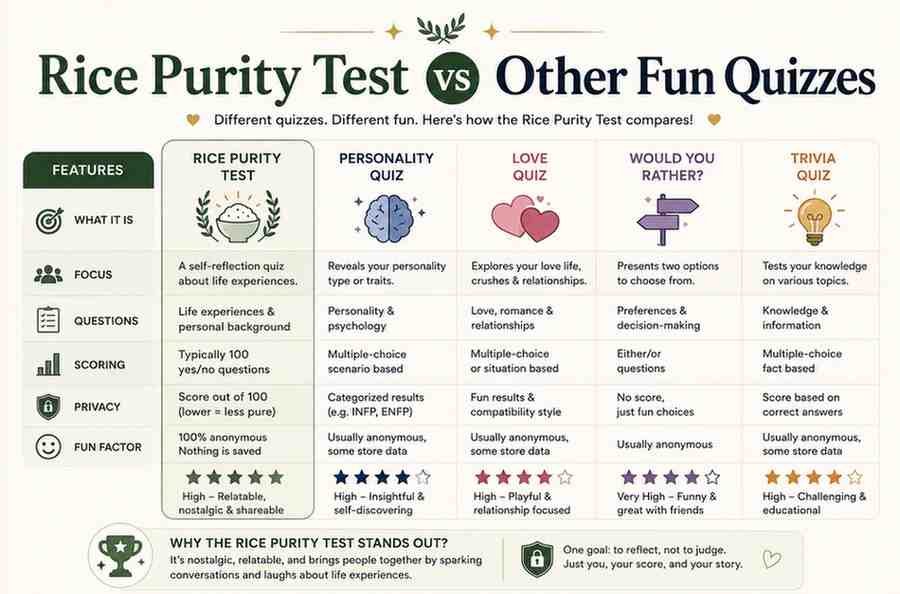
The internet is full of quiz formats — personality tests, trivia challenges, “which character are you” style content, and self-report checklists like the Rice Purity Test. All of them share a basic goal: give people a quick, engaging way to learn something (or think they’ve learned something) about themselves, then share it. But the mechanics behind each type differ quite a bit, and understanding those differences explains why the Rice Purity Test’s scoring works so differently from a typical personality quiz.
Rice Purity Test vs Personality Quizzes
Personality quizzes (think “Which Hogwarts House Are You?” or Myers-Briggs-style quizzes) ask you to answer hypothetical or preference-based questions, then sort you into a category based on patterns in your answers. The Rice Purity Test doesn’t sort you into a category at all — it simply tallies real, self-reported past experiences into a single number.
| Feature | Rice Purity Test | Personality Quiz |
|---|---|---|
| Question type | Yes/no about past experiences | Preference or hypothetical scenarios |
| Result format | Numeric score (0–100) | Category or type label |
| Basis | Factual self-report | Interpreted personality traits |
| Purpose | Reflect experience, spark comparison | Reflect personality, spark identity discussion |
Rice Purity Test vs Trivia Quizzes
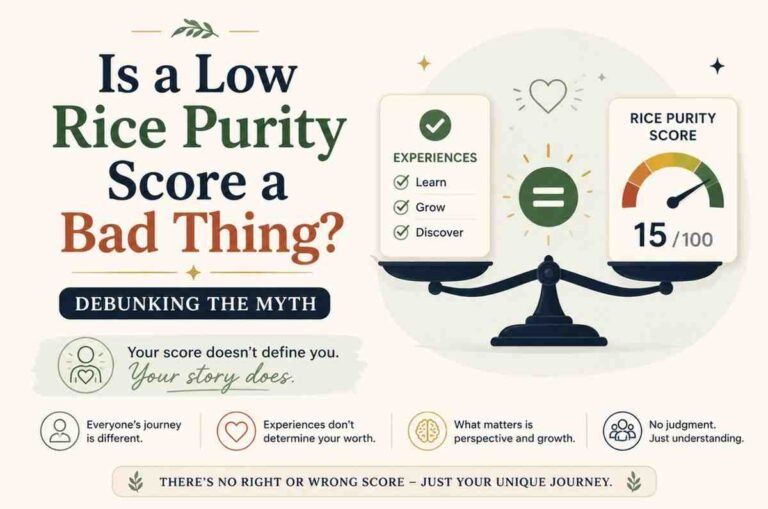
Trivia quizzes test knowledge — there’s a correct answer, and your score reflects how much you know about a subject. The Rice Purity Test has no correct or incorrect answers; every response is simply true or false about your own life. That distinction is a big part of why, as covered in our piece on whether a low score is a bad thing, there’s no “passing” or “failing” involved.
What Sets the Scoring System Apart
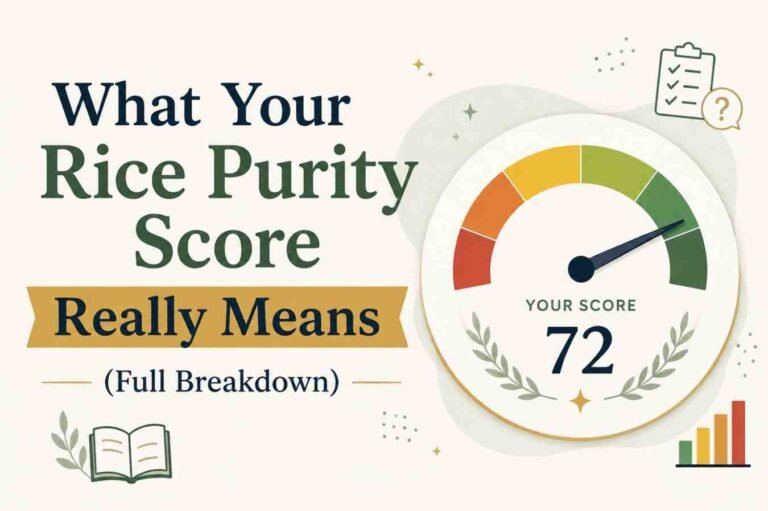
The Rice Purity Test’s scoring mechanism — starting at 100 and subtracting a point per “yes” — is unusually simple compared to most quiz formats, which often use weighted algorithms to calculate a result. This simplicity is part of its appeal: anyone can understand exactly how their number was calculated, with nothing hidden behind an opaque scoring model. For the full range breakdown, see the Rice Purity score chart.
Why It’s Built for Group Sharing
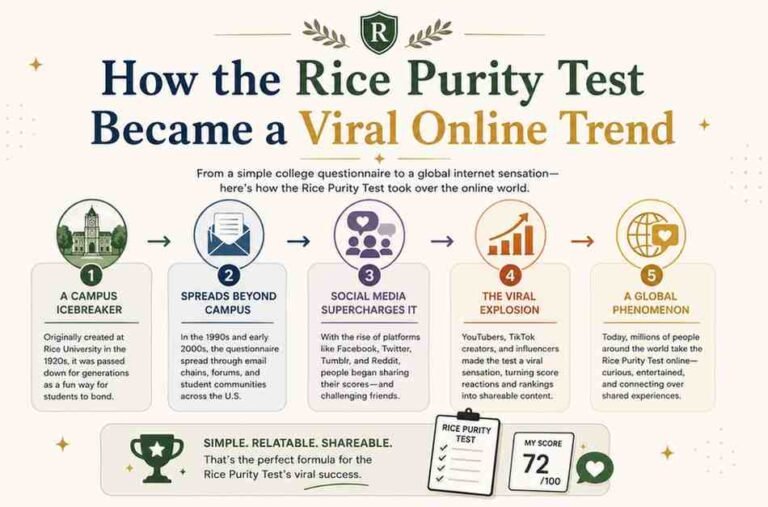
Where trivia and personality quizzes are often taken solo out of curiosity, the Rice Purity Test is especially built for group settings — comparing results with friends is practically the point. This social, comparison-driven design is a big part of how the test became a viral trend in the first place, since a shared, comparable score naturally invites group participation in a way a personality label doesn’t.
Frequently Asked Questions
1. How is the Rice Purity Test different from a personality quiz?
It tallies real, self-reported past experiences into a number, rather than sorting you into a personality category based on preferences.
2. Does the Rice Purity Test have right or wrong answers?
No — every answer is simply true or false about your own life, so there’s no correct or incorrect response.
3. Is the Rice Purity Test scored the same way as trivia quizzes?
No. Trivia quizzes score knowledge accuracy; the Rice Purity Test scores self-reported experience with a simple point deduction system.
4. Why is the scoring system so simple?
It starts at 100 and subtracts one point per “yes” answer, making the calculation transparent and easy to understand.
5. Is the Rice Purity Test meant to be taken with friends?
It’s commonly taken in groups since comparing results is a big part of how people engage with it.
6. Do personality quizzes and the Rice Purity Test measure the same thing?
No — personality quizzes interpret traits and preferences, while the Rice Purity Test simply counts past experiences.
7. Can you fail the Rice Purity Test?
No, there’s no pass or fail — it’s a self-report tally, not a graded assessment.
8. Which type of quiz is more scientific — Rice Purity or personality tests?
Neither is scientifically validated in the way formal psychological assessments are; both are informal, casual quiz formats.
9. Why do people compare the Rice Purity Test to trivia quizzes?
Because both are simple, quick online quiz formats, even though their scoring logic is completely different.
10. Does the Rice Purity Test use an algorithm like other quizzes?
No — its scoring is a straightforward point deduction, unlike weighted algorithms used in many personality quizzes.
11. What makes the Rice Purity Test more shareable than trivia quizzes?
Its single, easy-to-compare numeric score makes it simple to share and discuss with friends.
12. Is the Rice Purity Test considered a personality test?
No — it’s a self-report experience checklist, not a personality assessment.